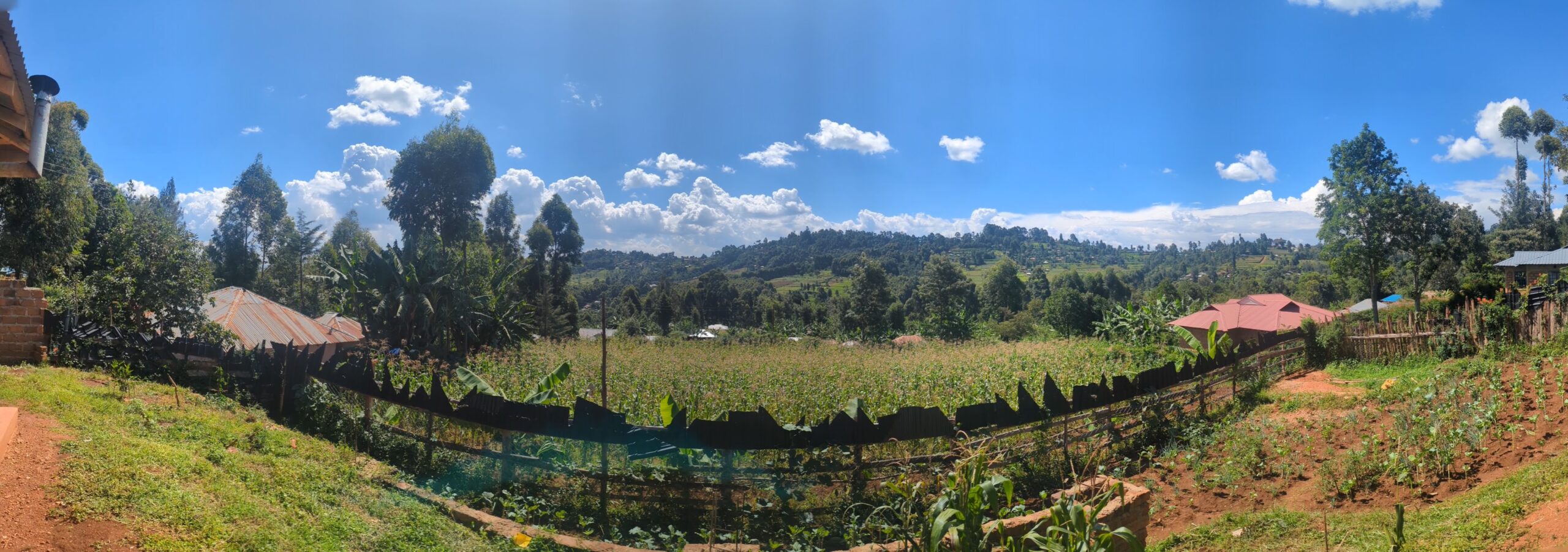
We arrive at the Compound, a big metal gate framed by walls all around, starkly contrasting the muddy roads we’ve been driving on. Kaely makes a call, and shortly after I turn off the engine, a boy opens the gate and signals us to drive in. The path is narrow, and I hesitate to move until he steps aside, but the engine won’t restart anyway. It takes seven attempts—turning everything off, switching to park, removing the key, and trying again—before it finally roars back to life. The path winds about 50 meters between bushes and the wall, then we turn right and park in front of the entrance. Now, the car won’t turn off. Just fabulous. Kaely is already greeting everyone, pointing toward me, while I fumble to shut off the engine. It keeps running, even with the key out. Eventually, I give up and join her, welcomed warmly by everyone in a heartfelt introduction.
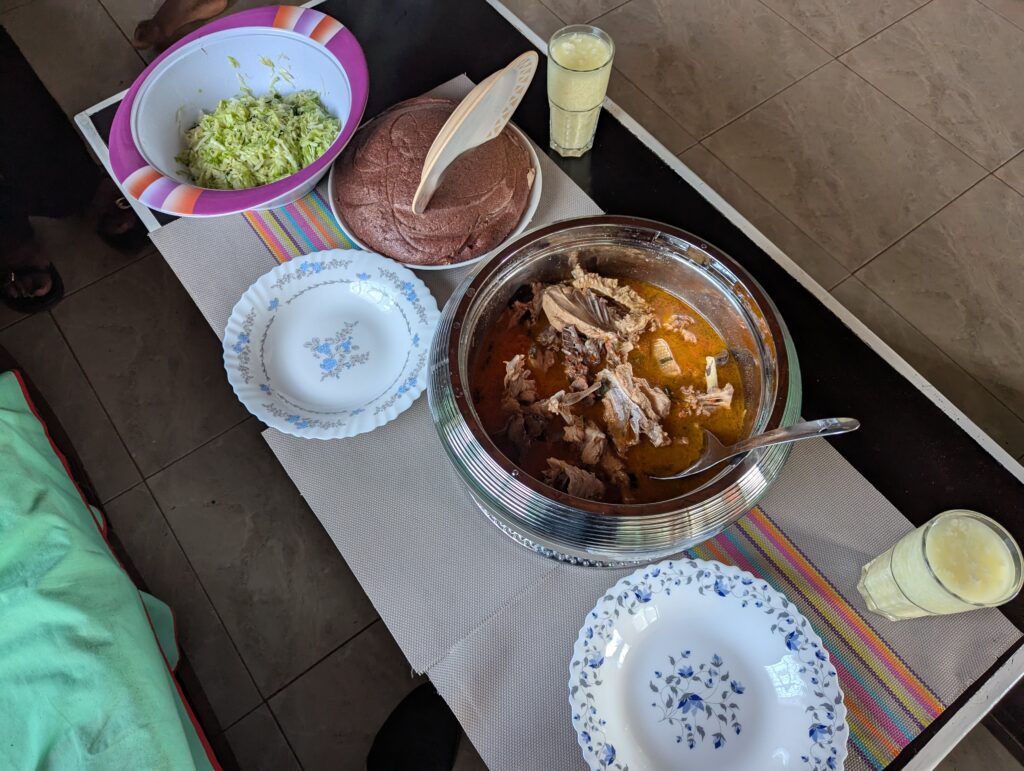
We settle in the large living room and, after the traditional handwashing with bowls at the table, enjoy a freshly cooked matoke stew with whole-grain ugali and greens. It’s delicious, and I only hold back from several seconds to avoid eating someone else’s portion.
We call a local handyman, Frank, to deal with the car while we chat. Kaely’s granddad is brought outside, and I’m amazed by how sharp and present he is at 100 years old, despite a hip fracture that limits his walking. He seems content, gazing across his beautiful farm. Kaely brought several flat caps from Turkey—one for me and one she insisted I give to him. We’re both wearing them now, our matching caps sparking a smile as we sit and talk in simple English for a few minutes, connecting over the moment.
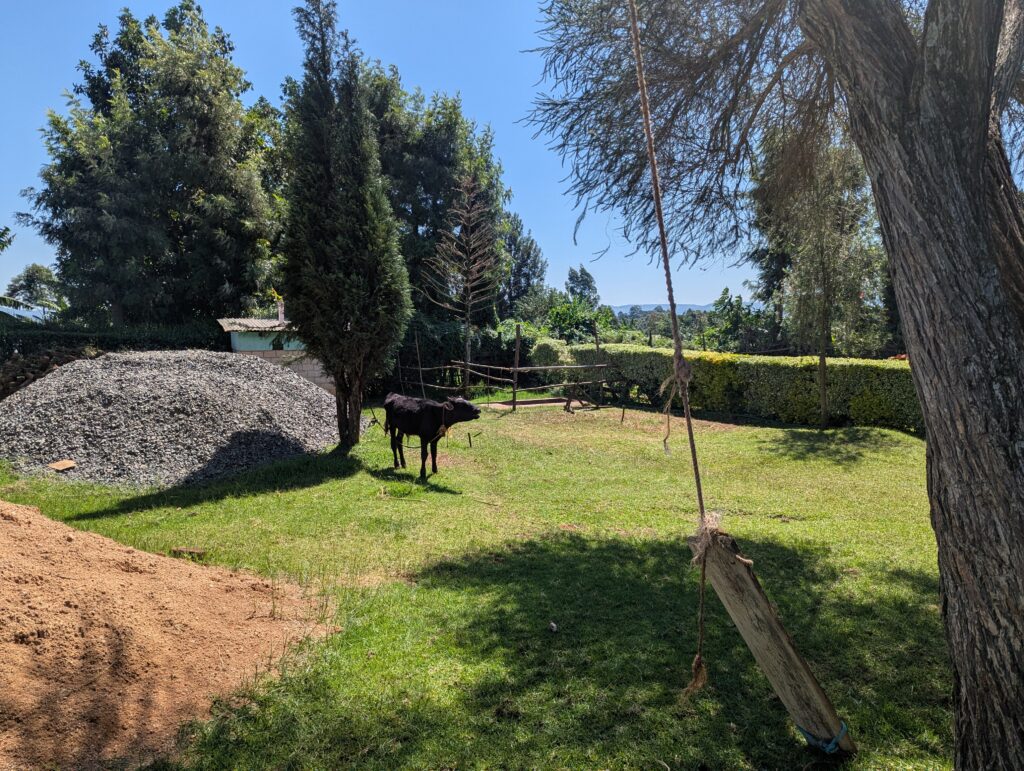
Later, the younger generation gives me a tour of the farm. They’re a bit shy but eagerly show me everything—the banana trees, avocado plants, tea bushes, and more. It’s overwhelming, and I can’t keep it all straight. Near the end of the tour, we cross an ant trail stretching over the narrow, downward path. We skirt around it and continue to the spring, the source of fresh water for everyone nearby, right on the grandparents’ farm. I also see red earth bricks drying and learn how they’re made traditionally, including a detour to an excavation site. On the way back, we pick plants the ants dislike and watch them reroute their path when we place the plants in their way. Before dinner, we grill corn over an open fire in the fire hut. I nearly burn my hands trying to remove it, sparking warm laughs from everyone.
By the time Frank returns with the car, it’s late. He’s fixed everything except the lights, as there were no parts available. He offers to drive us to a nearby hotel. Kaely and I share a beer there, but the wind rattles the doors, spooking her, so we call it a night and rest.
As usual, I wake up before her and decide to explore around the hotel to let her sleep. I discover an amazing rooftop and instantly want to stay longer. But see for yourself.

The Hotel is nice and still being extended, the Suite is being constructed – the views are stunning all around.
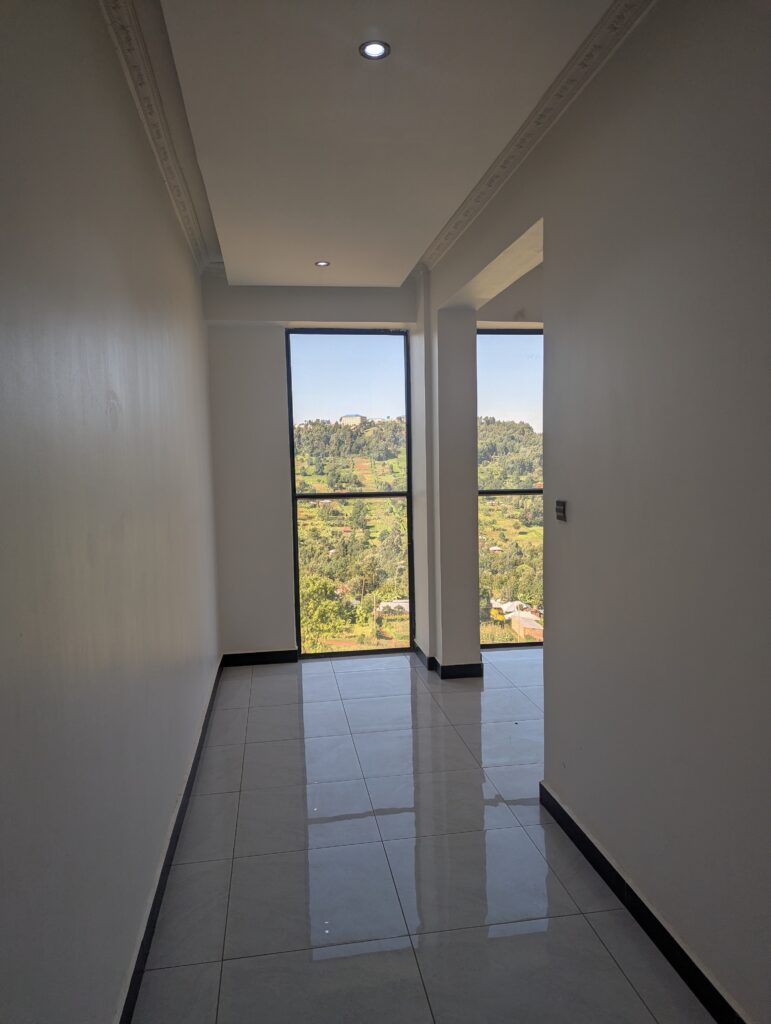

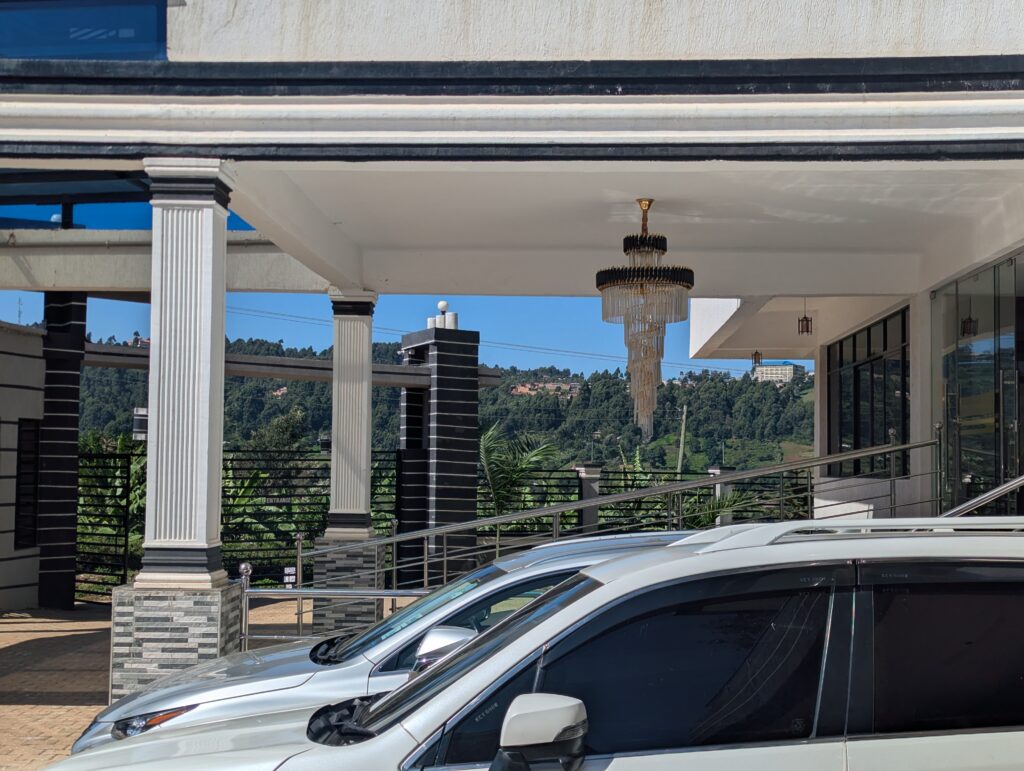
After a nice breakfast on the terrace, the morning sun casting a warm glow over the hotel’s rooftop, we pack our things and head to the car. Surprise, surprise—it won’t start. Feels like the battery this time, drained and stubborn, just like yesterday’s antics. We call for help, and technician helps with an impromptu remote starting device—a jumble of wires and clips that looks like it was cobbled together in a shed. After some fiddling, the engine sputters to life, and we’re back on the road, rolling toward the farm to spend a bit more time there before heading to Kaely’s other grandparents, who live nearby.
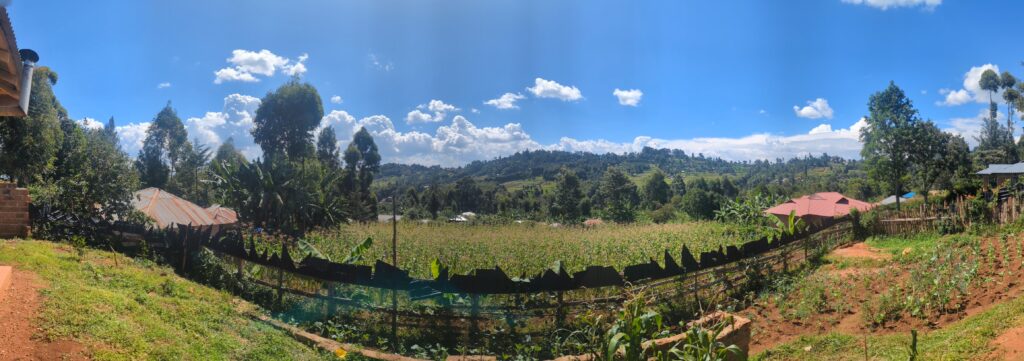
The welcome at the farm is, as expected, warm and heartfelt. It’s like stepping into a hug—the kind that makes you forget the car troubles and muddy roads. The views here are just as stunning as before, with rolling hills stretching out, dotted with banana trees and patches of vibrant green. The air smells fresh, like earth and leaves, and the distant hum of the farm’s daily rhythm feels grounding. Kaely’s granddad is out again, sitting under a shady tree, his flat cap tilted just so. He waves us over, and I can’t help but grin, knowing we’ve got matching ones thanks to Kaely’s Turkish haul.
As the day creeps in, we know it’s time to head to the other grandparents’ place. The car, thankfully, starts this time—though I hold my breath as I turn the key. We say our goodbyes, promising to return soon, and drive off down the narrow path, the gate creaking behind us. The road to the other grandparents’ home is short but winding, cutting through fields that shimmer in the heat. When we arrive, their welcome is just as warm, their smiles wide as they pull us into their small, cozy compound. The views here are equally breathtaking—hills rolling into the distance, framed by a sky so blue it feels like a painting. Their home is simpler, but the love is just as big.
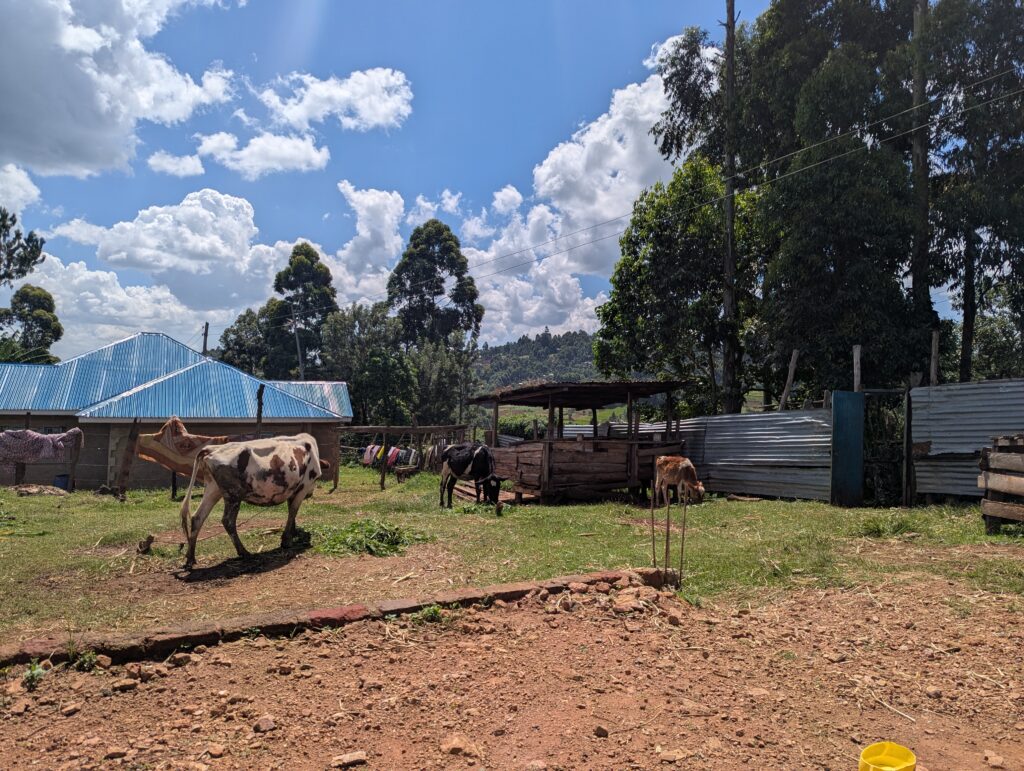
Damn, Kisii land has something to it. Lunch with Kaely’s family is a feast of warmth and flavor—more spicy peanut sauce, roasted maize, and greens that taste like they were picked ten minutes ago. We’re sort of on a timer, though, and I’m hyper-aware of the sun creeping lower. I really don’t want to drive in the dark. Sunset here hits like clockwork, and the dark is darker than I’m used to—no streetlights, no glow from a city skyline, just a thick, inky night swallowing the road.
But we can’t leave yet. Kaely insists we see her aunt’s new house, still under construction next to her grandparents’ place. It’s right on the hill, too, and the climb is steep—my calves burn just looking at it. The house is simple, all red earth bricks and raw potential, but it’s beautiful in its own way. I’m struck by how people here find happiness in the essentials, without the wasteful, “luxurious” clutter of Western Europe. It’s refreshing, grounding, even if my mind’s half on the ticking clock.
After lunch, we sip strong, bitter coffee, and I’m caught in a warm tug-of-war between Kaely and her grandmother over who’s laughing harder at my attempts to pronounce local words. We snap photos—everyone crowding together, smiles wide, the hill and sky framing us like a postcard. Saying goodbye to the family members staying behind feels heavy, like leaving a piece of the moment behind.
The car’s packed, time’s running out, and then comes the kicker: they ask me to pull our gigantic beast of a car into a super tight spot. I don’t want to park; I just want to go. Every minute we linger is another minute driving in the dark without proper headlights.. As much as I like Kaely’s family, I’m not thrilled about visiting her uncle right now. I’m stressed, a bit mad even—we agreed on a departure time, and we’re way past it. My jaw tightens as I force a smile through small talk with her uncle, nodding politely while my brain screams, “We need to move!”
Finally, we’re off, with one of Kaely’s cousins hitching a ride to Nairobi. At least if we crash, we won’t die alone, I think cynically, gripping the wheel. The sun dips below the horizon, and the dark creeps in fast. My eyes strain, the road barely visible, and fatigue hits like a wave. We pull over for a quick coffee break in Narok—no time for nyama choma, though the smoky smell tempts me. The coffee’s strong enough to jolt me awake, and we push on.
We arrive in Nairobi tired and exhausted, the city’s lights a jarring contrast to Kisii’s pitch-black roads. A quick meal of chicken and fries later, we collapse into bed, the day’s chaos fading into the hum of the city outside.